
Women in Consulting: Breaking through, burning out and building what’s next
A frank conversation with senior women in consulting on the hidden rules, double standards and structural barriers shaping careers — and what we can all do about it.
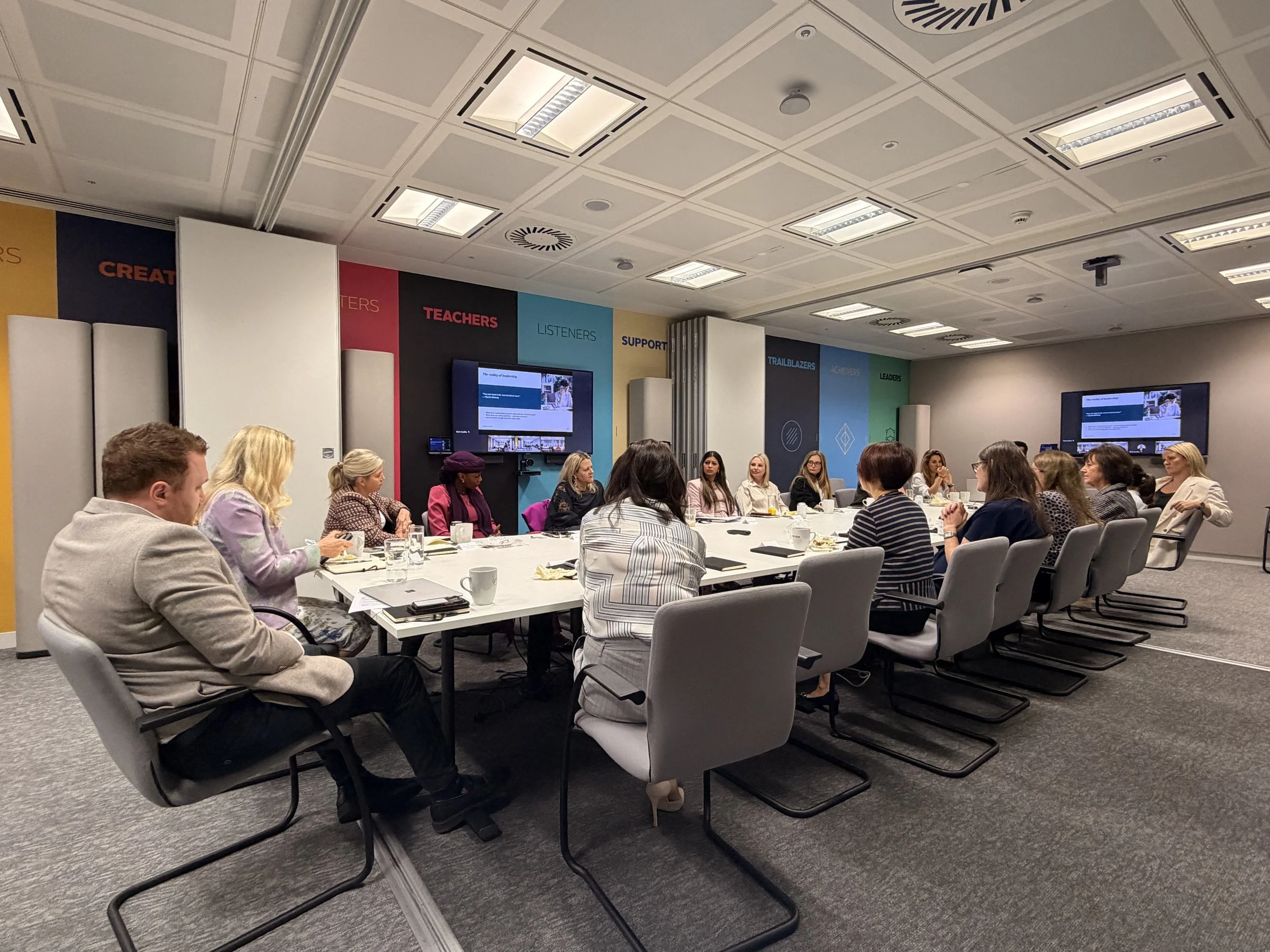
On Thursday 30 April, a group of senior women in consulting came together in London for an InX roundtable breakfast. The conversation was frank, insightful and — at times — uncomfortably familiar. Across the table sat leaders from some of the most reputable consulting firms, all gathered to discuss what it really takes to get to the top, and whether the path there needs to change. This is what we heard.
TLDR: Key takeaways
Women in consulting face structural disadvantages that compound as they progress — from biased feedback at junior level to the Partner process itself.
The double standard around confidence and self-promotion remains pervasive, even in firms with stated commitments to equity.
Some senior women are actively choosing not to pursue Partner — not because they can't, but because the role as currently structured doesn't look sustainable or desirable.
Sponsorship, psychological safety and visible boundary-setting by leaders are the interventions most likely to make a lasting difference.
Firms risk losing their best talent if they don't actively design career paths that reflect the realities of modern life.
The uneven playing field
The hurdles facing men and women in consulting are not the same. That's not a controversial statement, but it's worth naming plainly, because a lot of the structural disadvantage is subtle enough to be explained away.
Credit where credit’s due
During COVID-19, it was frequently women who stepped up on pastoral care — checking in on teams, holding people together through uncertainty. That work was valued, but it had a cost: time spent on people meant time not spent hitting financial targets, and it's financial targets that drive Partner decisions. The care work didn't show up on an end-of-year review. The missed revenue did.
The same dynamic plays out in visibility work. Senior women reported being on many more interview panels than their male counterparts — because there are fewer of them, they get asked more. Again, that's time away from the activity that actually moves the dial on promotion. Geography adds another layer: in some parts of the market, female Partnership rates remain in single figures.
The panel problem
The Partner process itself deserves scrutiny. Typical processes are lengthy, often lasting anywhere between 2-12 months, and involve a business case or pitch presentation, rigorous Q&A preparation and sustained relationship-building with existing Partners, all on top of a full client workload. It is, by design, exhausting. And it rewards a particular kind of person: someone comfortable selling themselves, willing to schmooze and able to project confidence in a snapshot.
Statistics show men are more likely to go for roles they're underqualified for, negotiate harder on salary and get the benefit of the doubt in ambiguous situations. Women are more likely to assume excellent work will speak for itself, when that’s not always the case. What’s more, the coaching to help women navigate the politics of the process is often absent entirely.
"Success is learning the choreography — only once you know this do you get space on stage, otherwise you're left behind the curtain."
The invisible tax of being ‘too much’ or ‘not enough’
There is a particular kind of exhaustion that comes from spending a career calibrating your own behaviour — and it's one that men in the room rarely described.
One participant described sponsoring a junior candidate who had received feedback from a male board member that she was "a bit bolshy" and might "jar with clients" — despite displaying a level of confidence that would have been unremarkable in a male peer. The feedback sounds like development advice. It rarely comes with a clear definition of what good looks like, because good tends to mean something closer to "more like the men already at the top."
The language trap is real too. Women tend to say, "we did this", while men say, "I did this." When a woman says, "I did this," she risks being perceived as selfish. When she says "we," she becomes invisible in the credit-taking that determines progression.
“At some point, you're so busy managing the performance that you've stopped being yourself — and that's a loss for the individual and for the firm that hired her for exactly those qualities.”
What the path to Partner really looks like
For those who do pursue Partner, the reality at the top is not always what was imagined. The support structures that exist for Senior Managers and Directors tend to disappear. There's no one ensuring you have work. The safety net is gone. And many male Partners have a partner at home handling the domestic and emotional labour that makes the role sustainable, such as childcare, school admin, the invisible logistics of family life. For women, and particularly for single parents, that backstop often doesn't exist.
Several participants noted that some of the most capable women they know have actively decided not to go for Partner — not because they couldn't get there, but because they've watched what the role looks like in practice and decided not to pursue it. That's a retention and pipeline problem. If the role is only genuinely accessible to people with a particular kind of domestic support, firms are narrowing their own talent pool.
InX's perspective
At InX, our due diligence on senior candidates covers the expected ground, including revenue track record, client relationships, depth of expertise, but the most revealing conversations are about personality, cultural fit and how someone operates under pressure.
People invest in people. The traits that make someone genuinely excellent at senior level — adaptability, emotional intelligence, the ability to read a room — are often the same traits that have been quietly penalised on the way up. We work to make sure that doesn't cost firms the talent they need most.
Building environments that actually work
The conversation didn't stay in problem-mode. There was real energy around what individuals and firms can do practically to support women in consulting.
Sponsorship over sympathy
Mentorship advises someone on what to do, while sponsorship puts your own credibility behind them in rooms they're not in. Those who have benefited from active sponsorship, such as someone senior calling out biased feedback, or advocating for a candidate being held back, described it as genuinely career changing. However, it requires people with power to use it.
When senior women leave firms, others often follow — not just out of loyalty, but because the people calling out bad behaviour are gone.
Setting boundaries starts at the top
Psychological safety doesn't come from a policy; it comes from watching senior people model it. Practical examples from the room:
Being open about commitments: "I won't be in before 9am on school drop-off days — if I'm doing my job, no one will need to ask questions."
Not asking your team to do things you wouldn't do yourself.
Giving time in lieu when people work late and making sure it is not a common occurrence.
Being openly curious about your team's home lives, creating conditions for flexibility needs to surface before they become crises.
Training programmes for senior women have their place, but they can only go so far in cultures that aren't going to change in eight weeks. The more lasting work is in how firms design the Partner process, how they define and measure performance and who is in the room when those decisions are made.
A note on the next generation
Junior talent is looking at the women above them and asking a simple question: do I want that?
When the women at Partner level are visibly stretched — giving 110%, making sacrifices, managing perceptions at every turn — it doesn't always make the role look aspirational. Boutique firms, female-founded businesses and independent consultancies are all growing in appeal, in part because they offer different versions of what a senior career can look like.
The question isn't just how to get more women to Partner level. It's how to make Partner level something that more people, regardless of background, actually want. That means being thoughtful about what you model, talking openly about how you've navigated hard moments and designing pathways that don't require people to give up the rest of their lives to access them.
Partner with InX
InX specialises in placing senior consulting and professional services talent across strategy, transformation and advisory. We take cultural fit as seriously as technical credentials, and conversations like this one are at the heart of how we think about senior leadership.
Whether you're a firm building a more sustainable pipeline to Partner level, or an individual working out what the next step looks like, we'd welcome the conversation. Get in touch with our team: Rishi Sodha, Jack Porter and Amber-Rose Chapman.
Don’t forget to subscribe to the InX Connect Newsletter for insights, analysis and upcoming events.